Form
Sponges
Grit
100-220
Material
aluminum oxide
The verdict
Where this pick fits.
Conforms to every profile sheet sandpaper can't follow. Fine on one side, medium on the other. Rinse it and it comes back for another pass.
Fine/medium foam that hugs a curve and forgives your grip.
Quick take
- Best for: trim work, contoured surfaces, between-coat finishing
- Format: Sponges
- Tier: Budget tier
- Grit lane: 80, 100, 120, 150, 180, 220
The full read
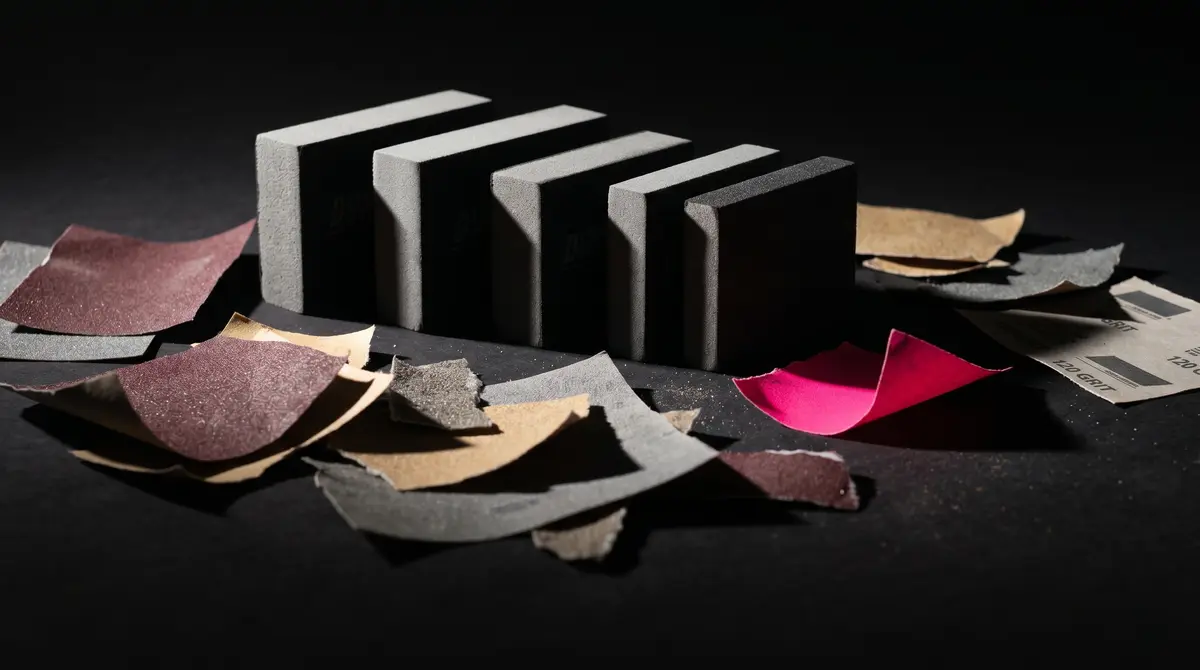
Flat paper walks right past a curved profile — it only ever touches the high points, so molding, trim, and turned edges get missed. A sanding sponge follows the shape instead of fighting it, and 3M's fine/medium combo puts aluminum oxide on a foam block that presses into every contour a sheet can't reach. Fine on one face for finishing, medium on the other for the step before it, so one block handles two stages of a curved surface without a swap.
The foam is forgiving in the good way — it conforms to the profile and cushions an uneven grip, so you're less likely to flatten a detail you meant to keep rounded. And it rinses: clear the loaded grit under a tap and it comes back for another pass, which stretches a three-pack further than the price suggests. Budget-tier, built for trim carpenters and anyone doing between-coat work on anything that isn't flat — it hugs the curve and forgives the hand.
Use it when
The fit is obvious.
- · Reach for the 3M Sanding Sponge Fine/Medium when the job is trim work, contoured surfaces, and between-coat finishing — that is the fight it was built for.
- · Aluminum oxide is the reliable one: cheap, tough, no surprises and no complaints. It will outlast your patience before it outlasts the job.
- · This is the working middle: enough bite to matter, refined enough to leave the job somewhere worth continuing.
Skip it when
The job asks for something else.
- · Leave it if you are actually solving a different stage of the climb than the one this pick was chosen for.
- · Leave it if longevity and cut speed matter more than the price — cheap abrasive is cheap for reasons you feel on the tenth sheet.
- · Leave it if you need dead-flat pressure across a broad panel; foam gives where you least want it to.
Best for
Where it earns its keep.
- · trim work
- · contoured surfaces
- · between-coat finishing
Keep moving
Useful next clicks.
Buyer questions
The practical questions.
What is the 3M Sanding Sponge Fine/Medium actually good at?
Fine/medium foam that hugs a curve and forgives your grip. Conforms to every profile sheet sandpaper can't follow. Fine on one side, medium on the other. Rinse it and it comes back for another pass. In short: it earns its keep on trim work, contoured surfaces, and between-coat finishing.
Is 100-220 the right grit lane for this?
It sits closest to 80 grit, 100 grit, 120 grit, 150 grit, 180 grit, and 220 grit. This is a cutting stage, not a finish stage. Use it to remove material, not to fake smoothness.
What should you put it up against before buying?
Put it against other sponges in the same price band doing the same job — that is where speed, finish, and cost-per-use sort themselves out.
Rough start. Smooth finish. The gap between is where the work happens.
House rule
UltraRough earns a small commission on Amazon links. Your price is identical. Our take doesn't soften for anyone.